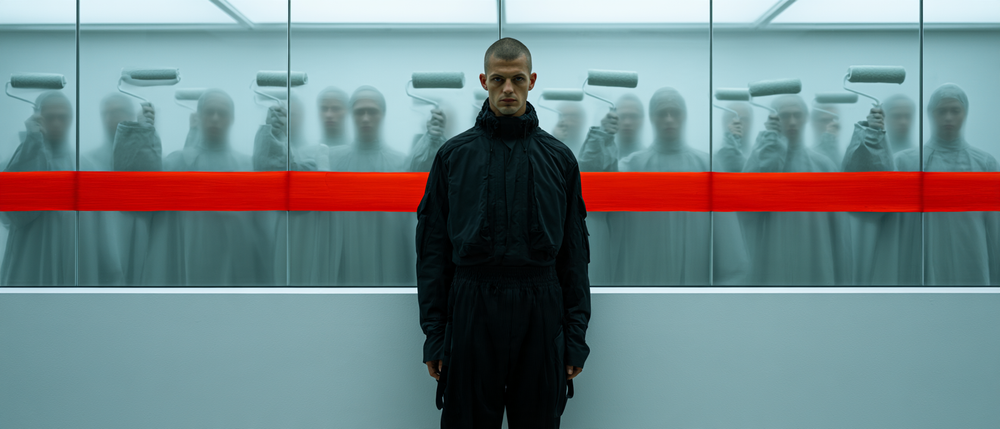

A man wakes up and does not reach for his phone. For the first hour of his day, there are no notifications, no headlines, no urgent messages from colleagues who forgot the difference between urgent and important. He drinks coffee in silence, watches light move across the wall, thinks his own thoughts before anyone else's.
In 1950, this would be ordinary. In 2025, it is quietly revolutionary.
This deliberate choice rejects the assumption that your attention belongs to everyone else by default. That your morning mind, your focused hours, your present moment are public resources to be claimed by whoever shouts loudest. The modern world operates on a simple premise: you will react. And reaction, dressed up as productivity, has become the organising principle of contemporary life.

The Tyranny of Immediate Response
We have built a civilisation around the reflex. Every interface, every notification, every "quick question" trains you to respond without pause. The phone buzzes, you look. The email arrives, you answer. The Slack message appears, you react. This is not engagement. This is conditioning.
The cost is not just fragmented attention. It is fragmented identity. When you spend your days responding to other people's priorities, you forget what your own look like. You become fluent in reaction but lose the ability to act deliberately. Your thoughts are no longer your own because you never give them time to form.
The modern knowledge worker checks email 74 times per day and switches tasks every 3 minutes. He lives in a state of continuous partial attention, always slightly distracted, never fully present. This is the water we swim in, and we call it productivity. But productivity means producing something. And you cannot produce anything meaningful when your mind is always somewhere else.
Most of what feels urgent is not. Most problems solve themselves if you give them time. Most emails do not require immediate response. But we have been trained to treat every input as crisis, every message as emergency. And so we spend our days putting out fires that were never really burning.

This content is only available to subscribers
Subscribe now and have access to all our stories, enjoy exclusive content and stay up to date with constant updates.
Unlock contentAlready have an account? Sign In