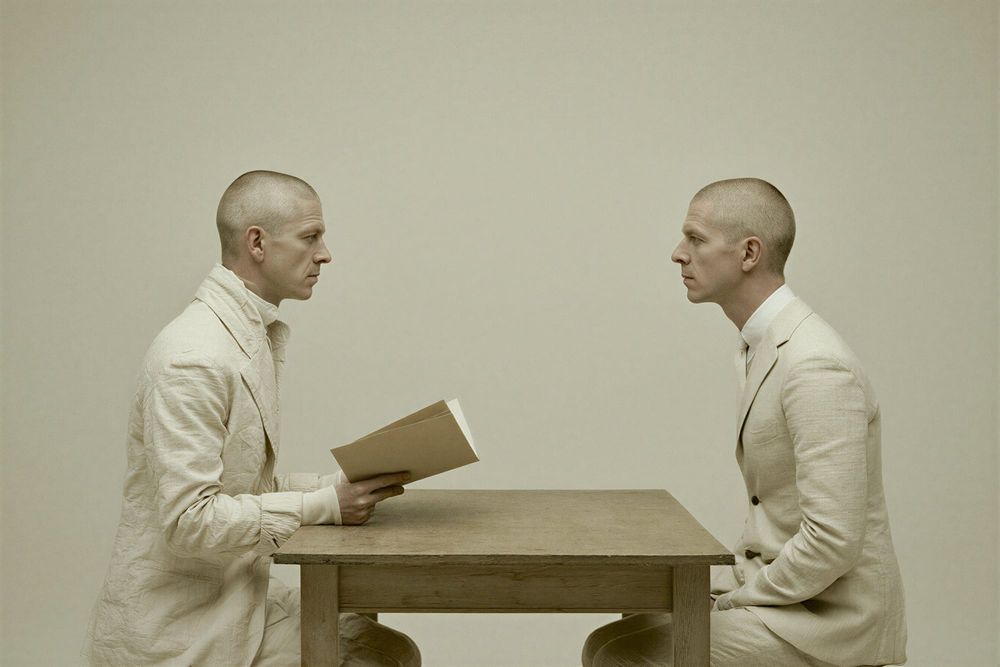

You come back from a week away, set down the suitcase, and at some point in the next day or two you sit at the desk and open the project file. The work is exactly where you left it. Nothing has moved in your absence. What has moved is a feeling that arrives unbidden, a low pressure across the chest. The instinct is to read this as the work itself calling you back. It is not the work. The work cannot speak. A figure has stepped into the room with you, and he has already taken his seat.
He has been there for years. You installed him yourself, though you cannot remember the appointment. He has no name on the door, no contract, no hours, and he has been carrying out his duties continuously since the moment you put the project on a list. Most men live with him their whole working lives and never notice that he is a separate faculty rather than an essential part of the self. The first useful thing to know about him is that he was hired.

The Moment of Installation
A wish does not have a watcher. The novel you might one day write, the company you might one day start, the language you might one day learn, sits in a category that generates no pressure of its own. The watcher arrives the moment the wish is written down, named, and committed to. Before that line in the notebook, the project is a possibility. After it, it is an obligation. The crossing requires no ceremony. A folder on the desktop, a sentence said aloud to the spouse over dinner, and the watcher takes up his post.
This is worth saying clearly, because most men experience the pressure of a self-imposed project as if it were intrinsic to the thing itself. It is not. The pressure was authored by you, in the act of crossing the threshold from wish to commitment. The watcher is the consequence of that authorship, not an independent fact of the world.

This content is only available to subscribers
Subscribe now and have access to all our stories, enjoy exclusive content and stay up to date with constant updates.
Unlock contentAlready have an account? Sign In