

Open any portfolio site in a given design scene this year and you will see the same neutral typeface, the same off-white background, the same case studies arranged in the same scrolling cadence. Read the essays being celebrated on a given writing platform and you will find the same opening hook, the same mid-piece personal anecdote, the same closing turn dressed up as insight. Listen to the records coming out of a particular musical scene and you will hear the same drum sound, the same vocal processing, the same harmonic restraint. Walk through the galleries of a given art moment and the palette, the scale, the subject matter all rhyme. The men producing this work are talented. Each of them, working independently, has arrived at the same answer to the same unstated question: what will my peers respect this year?
The pattern repeats wherever creative work is judged by a community of practitioners. Spend long enough inside any such scene and the costume becomes visible. The output converges, slowly, until the work of one man becomes almost interchangeable with the work of another. The differences are cosmetic. The substance has been homogenised. This is not a failure of talent. What has failed is the willingness to make something the scene has not already approved.
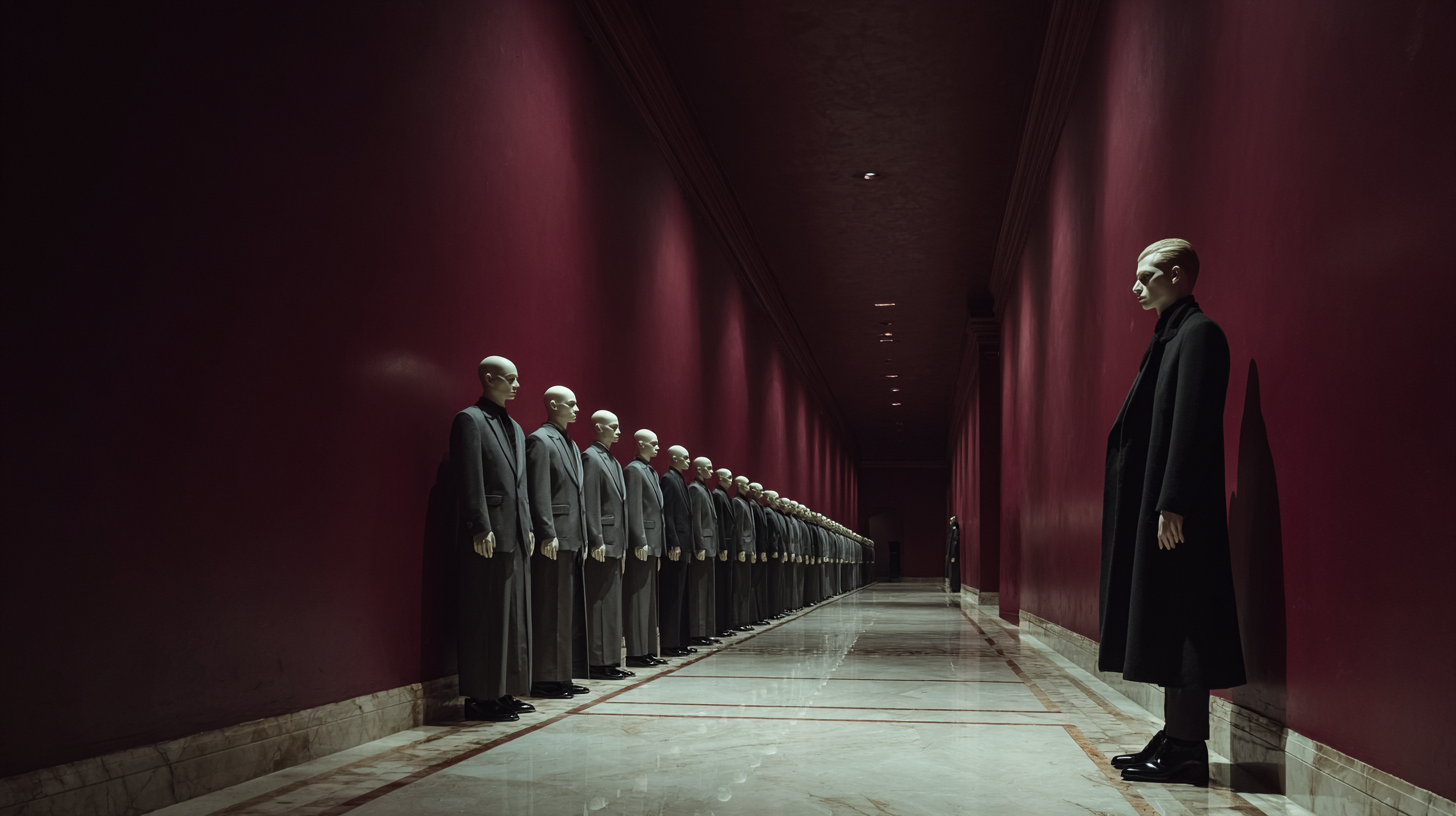
The Costume
Every creative community has a uniform: the typefaces, the sentence rhythms, the gear, the reference points, the framework, the editor, the ironic distance one is expected to maintain from one's own material. The uniform extends past aesthetic choices into the question of method. Each scene maintains a list of legitimate tools and a list of suspect ones, and the suspect tools are not always the inferior ones. Often they produce results that are functionally indistinguishable from, or better than, the approved alternatives. What makes them suspect is the signal their use sends about the man who reaches for them. The right tools mark him as serious, as having paid his dues, as belonging. The wrong tools mark him as someone trying to skip the queue, and the response is consistent: the work is dismissed before it is examined, and the man is reclassified as someone who does not really do the craft. The judgement is rarely about the output. It is about whether he was willing to suffer in the way the scene has agreed suffering should look.
The judgement wears the costume of generosity. The scene speaks of supporting artists, of valuing craft, of standing with the people who make the work. The support is conditional on the work being made in the approved way. A man who builds a livelihood and an audience using the suspect tools is not celebrated for having found a way to make creative work pay. He is treated as a contamination of the field. The same scene that claims to want artists to thrive would, if pushed to an honest choice, prefer that this particular man fail.

This content is only available to subscribers
Subscribe now and have access to all our stories, enjoy exclusive content and stay up to date with constant updates.
Unlock contentAlready have an account? Sign In