
You believe you think a lot. You probably don't.
What you do is worry. Constantly. About money, about your career, about whether you're falling behind, about what happens if this doesn't work out. And because worry feels exhausting, because it occupies mental bandwidth and leaves you drained at the end of the day, you assume something productive happened inside your skull.
It didn't.
Worry disguises itself as thought. It borrows the language of thinking, wears the facial expression of deep concentration, and consumes the same energy. But it produces nothing. No conclusions. No decisions. No forward movement. Just fatigue and the vague sense that you've been "working on" something all day.
Most men have never been taught the difference. And that ignorance is costing them years.

What Thinking Actually Looks Like
Genuine thinking is directional. It starts somewhere and arrives somewhere else. There's a question at the beginning and a conclusion (or at least a narrowed set of options) at the end. A man who sits down to think about whether to leave his job emerges with a decision, a timeline, or a clear list of what information he still needs before deciding. He moved from Point A to Point B.
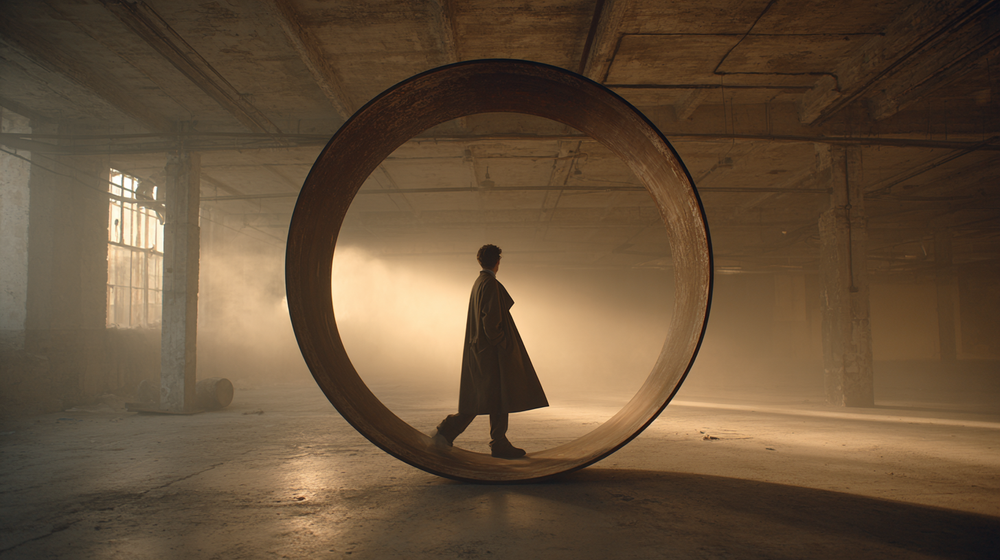
Worry, on the other hand, is circular. It starts with a question and returns to the same question. Should I leave my job? What if I can't find something better? What if I regret it? But what if I stay and nothing changes? Should I leave my job? The loop repeats endlessly, generating heat but no light.
You can test this with an honest experiment. Next time you spend an hour "thinking about" a problem, grab a pen at the end and write down every decision you made during that hour. Every conclusion you reached. Every option you eliminated.
If the page is blank, you weren't thinking. You were spinning.

This content is only available to subscribers
Subscribe now and have access to all our stories, enjoy exclusive content and stay up to date with constant updates.
Unlock contentAlready have an account? Sign In